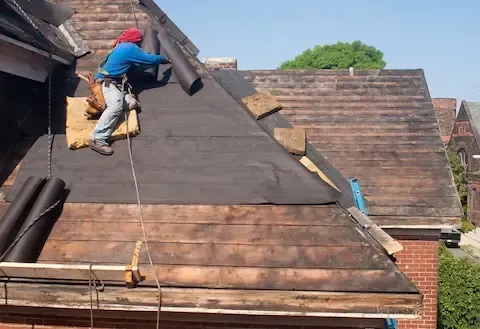
Summer Roof Repair Calls in Decatur AL Heat and Humidity
Summer in Decatur, AL hits roofs hard. Heat above 90°F blisters asphalt shingles, expands flashing, and forces trapped moisture out through ridge caps. Humidity from the Tennessee Valley compounds the damage by feeding mold into underlayment and softening decking. Most summer repair calls in Decatur involve blistered shingles, failed ridge caps, rotted sheathing, or lifted flashing around HVAC penetrations. These problems are predictable and fixable, but they worsen fast in Alabama heat if you wait. Catching them early in summer saves you from emergency calls in August when temperatures peak and contractor availability tightens.
Why Do Shingles Blister During Decatur AL Summers?
Blistering happens when volatile compounds trapped inside asphalt shingles expand under direct sun exposure. In Decatur, roof surface temperatures routinely exceed 160°F on south-facing slopes during July and August. When a shingle was manufactured with moisture in the asphalt or installed without adequate attic ventilation, that heat has nowhere to go. The result is a raised bubble on the shingle surface that eventually pops, leaving a bare granule-free patch exposed to UV. Once the granule layer is compromised, water infiltration follows quickly. If you see clusters of blistered shingles on the hotter slopes of your home near Morgan County Road or in older subdivisions along Beltline Road SW, ventilation improvement is often part of the repair scope alongside shingle replacement.
What Causes Ridge Cap Failure in High Heat?
Ridge caps take more abuse than any other part of the roof. They sit at the highest point, exposed to full sun on both sides, and they flex constantly as the roof deck expands and contracts through Alabama's temperature swings. Over time, the sealant strip under each cap shingle dries out and loses adhesion. In summer, thermal expansion can lift cap shingles slightly, allowing wind-driven rain to enter during afternoon thunderstorms common to the Tennessee Valley. Ridge cap failures account for a significant share of summer leak calls in Decatur. The repair involves removing the failed caps, inspecting the ridge board for moisture damage, and reinstalling with properly sealed replacement caps. If your attic has a ridge vent beneath the caps, that vent channel must stay clear for airflow to continue working.
How Does Humidity Cause Sheathing Rot Under Roofing?
Decatur's summer humidity averages above 70 percent on most mornings. When attic ventilation is inadequate, that moisture-laden air condenses on the underside of roof sheathing during cooler nighttime hours. Over multiple seasons, this cycling creates conditions for wood rot and mold growth even without a single active leak. Homeowners often discover sheathing rot only when a roofer walks the roof and feels soft spots, or during a full replacement when old decking is removed. Signs you may have a sheathing issue include sagging sections visible from the street, dark staining on attic rafters, or a musty smell in upper-floor rooms. Addressing ventilation at the same time as sheathing replacement prevents the rot from recurring. For Roof Repair that includes sheathing work, expect the scope to expand once the old material is peeled back and the full extent of damage becomes visible.
Why Do Flashing Leaks Increase in Summer?
Metal flashing around chimneys, skylights, and HVAC curbs expands significantly in Decatur's summer heat. When that expansion exceeds what the sealant joint can accommodate, small gaps open at the edges. A single afternoon storm can push enough water through a quarter-inch gap to soak insulation and damage drywall below. HVAC penetrations are particularly common failure points because rooftop units add their own heat load to the surrounding flashing, and condensate drainage can keep the area damp. Summer flashing repairs typically involve cleaning the joint, applying roofing-grade sealant rated for high-temperature exposure, and in some cases replacing sections of step flashing that have corroded or bent out of position.
What Should Decatur Homeowners Watch for After Storm Season Starts?
The Gulf moisture that feeds Alabama's summer thunderstorm pattern typically arrives in force by late May and stays through September. After any storm with winds above 50 mph or hail larger than a quarter inch, it is worth doing a visual check from ground level before calling a contractor. Look for missing or shifted shingles, granule accumulation in gutters, and any debris that may have impacted the roof surface. Storm damage often combines with existing heat-related wear, making the overall condition worse than either cause alone. Read our Decatur AL repair overview for a broader breakdown of what local inspections typically cover after weather events. Catching damage early in the storm season prevents compounding moisture entry through the hottest months when interior temperatures make attic inspections miserable and structural drying takes longer.
When Is Roof Repair Urgent Versus Schedulable?
Not every summer roof issue requires an emergency call. Active water entry into living space, daylight visible through the roof deck, or a sagging section are urgent and should be addressed within 24 to 48 hours. Blistering, minor granule loss, and small flashing gaps that are not currently leaking can typically be scheduled within a few weeks without significant risk, provided the area is monitored after each rain event. In Decatur's summer market, contractor availability tightens by mid-July, so scheduling non-emergency repairs in early June gives you more options and often better pricing than waiting until peak heat drives a surge in calls across Lawrence and Morgan counties.
